JACQUI GREAVES
  • Home
  • About
  • Stories
    • Flashes and Snippets >
      • Madame Baderschmitt’s Sweet Emporium
      • Touch
      • Familiar
      • Three Wishes
      • Resurrection
      • The Key
      • A Night Before Xmas
    • Published Stories and Poems
    • Byline
  • Blog
  • Contact

Lessons From World Fantasy Convention

11/26/2025

0 Comments

 
In the early months of 2025, my friend, and multiple award-winning writer-extraordinaire, Lee Murray ONZM, suggested that we attend the World Fantasy Convention in Brighton, UK. My first instinct was to say no because it’s fucking expensive to travel to the other side of the planet from Aotearoa New Zealand.
​
I’m so bloody happy that I changed my mind.

First, I got to travel with Lee, who shares my love of the weird and bizarre. We drove terrifying narrow roads, circled roundabouts searching for the exit, were kept company by ravens, wandered presque-lost across Bodmin Moor, laughed, ate all the cheese and revelled in ancient myths and legends brought to life in the curated landscapes of the south-west and south of England. She also held my hand throughout the Convention and introduced me to everyone—even people she was meeting for the first time herself. Being Lee’s friend meant that her friends, new and old, also became mine.

Second, after the disappointment of the 2020 WorldCon (CoNZealand), which thanks to Covid was virtual instead of local and in-person, it was incredible to experience a writers’ convention of a global rather than local scale.

I came away with new friends, personal contacts with several publishers, a deeper appreciation of the industry I’m part of, and some great book recommendations. Creative conversations in the bar, around tables, in the hallways and over food proved to be incredibly valuable. Both experienced and new writers were generous with their time and thoughts, and showed genuine interested in me and my writing projects. By the end of the fourth day, I was shattered but also reinvigorated with possibilities and ideas.

I spoke on two panels. The first was Feminism and Feminist Themes in Genre Fiction. I made the mistake of being too reliant on the page of notes I’d prepared, so panicked when they didn’t align with the first question I was asked. It threw me off. I was embarrassed and took a while to calm down and order my thoughts into something that made sense. I came away thinking I’d done a shit job. On the last day of the Con, I sat next to a horror writer who told me that the Feminism panel had been her favourite session. Redemption!

The second panel was Older People in Fantasy and Horror. By this stage, I was more relaxed and had managed to squash down much of my imposter syndrome. Also on the panel were, Juliet Marillier (Lifetime Achievement Award Recipient) and the UK’s master of horror, Ramsey Campbell. The room was packed. I only used my notes to refer to a few figures about the average age and sex of readers and for the rest of the panel talked from my experience of being older and writing older characters. I had fun, and given the audience response, they did to.

I don’t think I’ll ever be someone who speaks or sits on a panel without notes at hand, but what I learned was that I can trust myself. I have a wealth of lived experience in all manner of things and know stuff others don’t. I may not be able to give you a clear, concise and academic definition of what feminist genre fiction is—but I know how to write it.

I attended a heap of panels, some book launches and both the British (for which I was a judge) and the World Fantasy Awards (for which Lee was a judge) ceremonies. So there was lots of learning and clapping involved. My favourite of the panels I attended were Weird Fiction, Animals in Fantasy and Embodying the Non-Human. There’s a theme there!

It was a surprise to me that not everyone goes to Cons to attend panels, readings and book launches—some attendees spend the entire Con hanging in the public spaces—they go for the conversations, to make contacts, seeking opportunities for collaboration, and to develop relationships. Writing’s such a solitary pursuit, and yet success requires putting yourself out there. I’m not so good at that, but I forced myself to start conversations with strangers and talked about the Ghost Assassins of Bijou novellas to anyone who’d listen. I’d also taken a few copies of my short story collection, Letters From Elsewhere, with me and gave them to some lovely people.

The experience confirmed for me the extra challenges writers from Aotearoa face in being so physically distant from major markets. It’s so hard for us to raise our voices and be seen, when no one knows who we are. We can’t just catch a train or drive to next month’s Con to cement those relationships. Without substantial financial assistance or the Ghost Assassins of Bijou getting picked up and becoming a best-seller, it’s very unlikely I’ll attend another big international Con in the next few years so, for now, all I can do is rely on social media, my blogs and newsletters, and keep submitting my writing to keep my name in the forefront of people’s minds.
0 Comments

Reclaiming the Crone

6/3/2025

2 Comments

 
Speculative fiction (fantasy, science fiction, horror etc) is all too often populated with strong, young characters. People and creatures breaking out of their adolescence and at the start of their adventures or approaching the prime of their lives. Where young women and girls and non-binary characters feature more often as main and secondary characters, the same can’t be said for older characters. It’s uncommon for the protagonist to be of advanced years, and rare if that character’s a woman.

Older characters are either cast in supporting roles, like the wise old wizard and the sweet grandmother, or as the evil antagonist, the barrier to youthful success. If the antagonist is a woman—the witch, the hag, the crone—she’s often portrayed as jealous and spiteful, corrupted by age and bitter with disappointment. The crone is frequently portrayed as trying to regain their youth at the expense of the victim (some princess who’s never the hero). Youth is the prize.

In fantasy, crones are depicted as deceitful and ugly old women who use their powers for malevolent purposes. Recall how the beauty of Snow White’s stepmother and Melisandre in Game of Thrones corrupts when their true natures are revealed. As always there are exceptions to generalised observations, examples include Granny Weatherwax and Nanny Ogg from the Discworld series and General Leia Organa from Star Wars—these magnificent characters embrace and celebrate their age and don’t pretend to be anything but what they are—but they’re rare.

The crone, with some exceptions, is a woman to be feared.

In science fiction, crones as characters are often, non-existent or invisible. Check out the list of SciFi books featuring old women compiled by Sylvia Spruck Wrigley HERE.

It’s disappointing that our literary interpretations of alternate and future civilisations are, again and again, bereft of the aged. That there are so very few examples of older women cast as characters who captain spaceships or rule societies or play an active role in revolutions and rebellions. And yet, in terms of readership, women prevail. Read Nikky Lee’s summary of a 2018 James Cook University study HERE.

We need to do better. It’s bad enough having to live in a society that worships youth and strives to push back against the ravages of time through surgeries, fillers, pills and creams. We’re urged to disguise our age with makeup and hair dye, then accused of being deceptive. It’s an unwinnable battle.

I not only need my fiction to offer escape from reality, but I also crave to be represented in the books that I read. I’m not ashamed of my age—it’s hard won. My husband and my parents died younger than they should have—I celebrate every day that I’m gifted. But I’m very aware that I’m often no longer ‘seen’ or ‘heard’. We older women exist, we’ve seen and experienced a lot of shit, and we can’t be fucked putting up with it anymore.

When I set out to write the first novella in the Ghost Assassins of Bijou series, I did so with the conscious decision to portray the invisible crone. I went further than that—I weaponised her invisibility. Although it’s not always explicit, more and more of my recent stories feature older women as the main character. I’m reclaiming the crone as a feminist icon and whether they’re the hero or the villain depends on your point of view.
​
If you consider my characters to be evil, then I suggest that you should fear the crone!
2 Comments

Monsters From the Deep

10/31/2024

0 Comments

 
In the antipodes, Halloween is out of season, it’s spring here and all about rebirth and hope. So rather than talk about spooky things, this month I’ve mixed my interests in monsters and marine critters to talk about monsters from the deep.
 
As I’ve been writing the initial five Ghost Assassins of Bijou novellas, I’ve leaned into my training and expertise as a marine biologist. Bijou is a marine planet, with an equatorial archipelago of extinct volcanic islands making up the minor terrestrial habitat. Much like we Earthlings, the human inhabitants of Bijou are limited to the land and the coastal fringes and surface of the ocean. As the stories have progressed, it’s become obvious that, also like us, the human residents of Bijou know next to nothing about most of their planet. Unlike us, however, they do have relationships with the sentient inhabitants of their ocean—especially with the belosa, a cuttlefish-like creature, some of whom choose to be living spaceships for the ghost assassins.
 
I could have created an entirely new creature to fill this role, but the shape and motion of cuttlefish lends them beautifully to being spaceships. They’re also intelligent, have distinct methods of communication and are well studied. This made it (relatively) easy to take an extant creature and develop it into one of science fiction. And there’s so much more life in the depths that we can use in this way.
 
The deep sea is Earth’s largest habitat, offering a massive 97% of the habitable space available to life on our planet. Which is remarkable, given how little we know of the lives and range of creatures that exist there. It’s estimated that we know less than 10% of the existing species of the deep sea. What monsters lurk beyond our reach and understanding?
 
Let’s set the scene in our search for monsters from the deep.
The deep sea is defined as beyond the reach of light, on average this happens at around 200m of depth. No plants live beyond this depth. The water is cold (~2°C), and the pressures are immense (an additional atmosphere of pressure for every 10m of depth). Around 70% of the sea floor is abyssal plains, but there are a multitude of other habitats including: seamounts, canyons, troughs, ridges, cold seeps, hydrothermal vents, polymetallic nodule fields, and asphalt fields or brine pools. Life in these habitats requires extreme (to us) adaptations.
 
Many animals at these depths have foregone the need to move. Why waste energy on locomotion when the food comes to you? Others have abandoned the sun as their source of energy and rely instead on the energy contained in inorganic chemicals that leach through Earth’s crust at vents and seeps. Oxygen isn’t always required, and life has found ways to exist in extremes that should kill. Creatures are diverse, often long-lived, and can be surprisingly large.
 
Onto the monsters!
Let’s start with Cnidarians (the C is silent)—jellyfish, corals, anemones and hydroids.  These creatures have a mouth that also serves as their anus, they also have muscles, reproductive organs and tentacles. Already so much fun. But best of all, they kill with an explosion of tiny poison-tipped harpoons. Imagine visiting a strange planet, where simply brushing past a delicate feather-like shrub results in your body being swamped with a neurotoxin that stops your heart. The feathers wrap around you and the creature spends the next century feasting on your remains. Or your spaceship emerges from hyper-drive into the slow drifting tentacles of a massive space-jelly. There is no escape. Death is slow in the gut sac behind the creature’s dual-function mouth/arse—but it’s inevitable.
 
I’m not going to bother talking about marine worms, because…well…Dune. We all know what that looks like. All I’ll add is that the penis worm doesn’t hunt—it waits. To capture passing soldiers, the penis worm vomits out its toothed throat then retracts it, dragging the flailing prey with it. Death by penis worm—so noble.
 
Molluscs include a wide variety of life-forms including snails (gastropods); clams (bivalves); chitons; and squids (cephalopods). This group is rich pickings for premade monsters filled as it is with active predators armed with deadly toxins, camouflage and more terrifying tentacles. Probably the most frightening thing about molluscs is the weird feeding organ they all possess. It’s called a radula, a movable belt covered with teeth. The radula can scrape flesh from bones, drill holes in the hulls of space stations and inject toxins into unwary interplanetary explorers. Abandon all hope, weary travellers.
 
Crustaceans are equipped with many limbs. So many limbs. Delicate antennae that detect movement, taste, electrical currents to focus the hunt. Legs and more legs enable them to skitter over the barriers protecting a newly established colony. They swim through space and time using the oar-like appendages under their tails. Hidden beneath desert sands, they’ll spy on you with stalked eyes, then snap you up with claws and pincers that hold, slice and dice. Some of them move so fast they can teleport. You’ll never see the parasite before it steals your body for its own purposes—leaving you a more witless zombie than usual.
 
Next on our list of monsters from the deep are the armoured echinoderms—starfish, sea cucumbers, urchins, brittle stars, crinoids and the like—distinct in the animal world with their 5-sided symmetry. Ravenous and relentless they glide across the vast freeze-dried plains on hydrostatic tube feet. They’re impervious to your weapons. When they catch you—and they will catch you—they’ll hover over your trapped body and extrude their stomach out through their mouth. Once you’re digested, they draw their stomach inside and glide away. Behind them, the hollow husk of your once perfect body wafts in the currents of an alien breeze.
 
When you stare out at the night sky, filled with stars and mysteries, some of those stars aren’t what you think they are. Giant angler fish drift the universe on cosmic tides, their bodies invisible against the blackness of the void. Some of those distant stars are bioluminescent lures, hung out to draw in unsuspecting colonists searching for planets within the Goldilocks range. Once the unspeakably enormous maw closes its needled teeth around your interstellar generation-ship, the lights wink out—forever.
 
If, these macro monsters don’t offer you the perfect character for your next space horror…then what about the dangers of the micro monsters of the deep. Imagine bacteria that deplete the sulphur in your skin, leaving you with lesions that can’t heal and a compromised metabolism. Maybe the archaea in your gut are replaced by those that feed on, rather than produce, the methane you require for digestion? Deep sea viruses are more likely to be lysogenic, meaning they replace sections of your DNA with their own to reprogramme your metabolism for their own needs and they need to be cold…so very, very cold.
 
Honestly, I could write so much more but I think I’ve made my point. There’s no need to reinvent biology in the search for monsters. The way I imagine and extrapolate monsters from living creatures is, if it can swim it can probably also fly, if it can live in the dark expanse of the ocean, it’ll do just fine in space and if it’s small it can become very, very big.
 
Need more inspiration? Then, let your fingers lead you down a penis wormhole of online research. Or head to your local library and flick through any number of books about sea life (because it lives in my bookshelf, I referred to Peter Batson’s 2003 edition of, Deep New Zealand: Blue Water, Black Abyss, in my research for this blog). Finally, if you enjoy a field trip head to your nearest aquarium or marine research lab on an open day.

0 Comments

Why Speculative Fiction?

6/1/2024

0 Comments

 
Human beings, and I expect many our hominid ancestors and relatives, have indulged in sharing speculative fiction for as long as we’ve spoken stories. We created myths and legends to explain the world around us – to rationalise what we saw, felt, heard, tasted, and smelled. We’ve always speculated about things that lie beyond our understanding. It’s in our very nature to ask, ‘What if?’

We love reading speculative fiction. According to Wikipedia – if we ignore religious texts (I have thoughts), comics and textbooks, and add Tolkien’s Lord of the Rings (reportedly over 120 million copies sold in different formats) – 5 of the 8 best-selling books of all time are speculative fiction (and, yes, this is a western-centric assessment).

When we engage with speculative fiction, we’re not just entertained, we’re taken on a journey into the unknown. It allows us to indulge our desire for the extraordinary. It’s an invitation to dream and question.

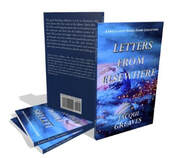
Speculative fiction offers us an opportunity to interrogate the real world from a safe distance. We can investigate what it means to be human. Most of the stories in ‘Letters From Elsewhere’, my collection of speculative short stories, explore what it means to be monstrous. What better way to do that than from the perspective of a so-called monster. Who was more monstrous – Mary Shelley’s Dr Frankenstein or the monster the he created?

Another favourite character of mine, who offers a unique perspective on humanity, is the cyborg, Murderbot (The Murderbot Diaries by Martha Wells). Much of Murderbot’s understanding of humanity comes from streaming soap operas, but when they work alongside actual living humans the reality is quite different. Through internal, and often comedic, dialogue, Murderbot provides a running commentary on the dangers of human emotions and how they compromise our motives and behaviours.

Through speculative fiction, we can hold a mirror up to ourselves in a manner that isn’t dangerous or confronting but gets to the truth of who we are. It allows us to confront our deepest fears, desires, hopes and wildest dreams from within the safety of fictitious construct.

Think of how ground-breaking ‘The Left-Hand of Darkness’ (Ursula le Guin) was in challenging the concept of binary sexuality, and ‘The Handmaid’s Tale’ (Margaret Atwood) was in exploring the rise of fundamentalism. Both books brutally critiqued society. That’s what speculative fiction can do.

Sometimes, the answer to ‘What if?’ isn’t happy. I wrote ‘Rose Moon’ in response to the election of Trump as President of the USA. I imagined a human world darkened by repression, cruelty, environmental damage, and religious extremism – tragically, that didn’t turn out to be the speculative component of the novella!

In the upcoming ‘Ghost Assassins of Bijou’ collection of novellas, I’m delving into misogyny, repression and the patriarchy. To lighten the tone, I’m telling the stories in the form of a Space Opera with humour woven through the prose. The messages are no less confronting, they’re just delivered in a more palatable package.

In speculative fiction, we can imagine how different environments, technologies, or societies might alter the human experience. Speculative fiction can foster discussion about socio-political issues, encourage diverse thinking and offer concepts for technological innovation. Submarines, space travel, computers, cell phones and virtual reality all featured in speculative fiction before existing in reality.

Speculative fiction taps into our curiosity about the future, the supernatural, and the abstract possibilities that lie just beyond our reach. It’s also fun!
0 Comments

​Genre Blending

10/5/2023

1 Comment

 
I often blend genres in my stories. I don’t do it to challenge standard conventions of genre, but as an extension of the “What If?” question. What if an elf finds herself in space?  What if a Greek god finds herself in Aotearoa? What if pirates are in space and use sex as a weapon, a reward and a negotiation tool?
 
What is a genre?
Genres began when Aristotle developed an absolute classification for Greek Literature: they’ve evolved.
Today, genre is an ever-expanding way to group books. Genres are used by librarians and booksellers to group books on shelves. They’re also a strong marketing tool and set readers expectations.
Genre fiction can be broken into a multitude of categories, including: comedy; fantasy; science fiction; climate fiction; dystopia; erotica; horror; crime; thriller; historical; romance; western; war; spy; and so on…the list is ever changing.
By blending genres, we create opportunities for new ways to tell stories. For example, science fantasy: where technology and magic coexist, and space opera: where science fiction, fantasy and drama can coexist.
 
How to blend
It’s important to start with a base genre. At its core what is the plot of your story about? Once the base is established other genres can be overlaid. It’s important that the secondary genres enrich, but don’t overpower the base genre. Each element must play a part in the plot or contribute to character development.
In my collection, Letters From Elsewhere, the story, Moths to the Flame, is at its heart a science fiction story with elements of fantasy, erotica and historical fiction.
 
Why blend?
Multiple genres can add depth to the plot. Readers don’t want to just know the science in science fiction, they want to know how it impacts the characters. Characters come alive. A detective story is one thing, but what if she’s having to deal with the challenges of being married to a vampire? By blending genres, the world gets bigger. We can create a universe where everything is not as it seems.
 
But the most important thing is to write a good story. All the genres in the world won’t make up for poor character development, weak world building or a lack of plot.
1 Comment

Letters From Elsewhere

9/14/2023

0 Comments

 
Picture
Letters From Elsewhere is my first published collection of short stories and is available as an ebook on all your favourite platforms.
Universal Link:
https://books2read.com/LettersFromElsewhere

For print version, search directly on your local Amazon or Barnes & Noble site.
 
Blurb
This genre-blending collection is rich in characters who aren’t always what they seem at first glance. Space pirates, Fire Elves and living grotesques take us on journeys across the multiverse and deep into the hidden crevices of the mind. These stories interrogate what it is to be monstrous; and along the way, they confront the patriarchy and explore the spectrum of sexuality. If you like your fantasy and science fiction a bit dark, laced with humour and sometimes spicy, these stories will entertain, disturb and challenge you.
​
“Jacqui Greaves titillates with this outstanding collection of speculative encounters, visits and ventures by otherworldly beings, each tale sharpening our understanding of the human condition and the tiny role we play in the universe. Cosmic, cautionary, and compelling, served up with a sprinkle of humour and a good dose of sauce, Letters from Elsewhere is a satisfyingly good read.” —Lee Murray, five-time Bram Stoker Award®-winning author of Grotesque: Monster Stories.

What inspired you to put together this collection?
I’ve been writing short stories for almost a decade now, so I’ve built up a large catalogue. Quite a few have already been published in various online magazines and anthologies, but over the years most of those publications have disappeared into the ether, leaving my stories orphaned. Others have just never found their place in the world.
Earlier this year, SpecFicNZ ran an online workshop on getting your short stories published. It got me thinking. When I went through my files, I realised I had a lot of orphaned and unpublished stories just sitting there doing nothing. So, ‘Letters From Elsewhere’ was born.
The collection covers a broad range of speculative fiction, including fantasy, science fiction, erotica and horror.
 
What on earth possessed you to mix your genres?
Honestly, I don’t set out to mix genres. I set out to ask “What if…”
Most of the stories in this collection are either fantasy or science fiction, with a few lying further afield on the spectrum of speculative fiction. A little under half incorporate explicit sex.
My genre blending is best demonstrated in the story ‘Moths to a Flame’, which has elves fucking in space – so fantasy, science fiction, erotica and a hint of historical fiction all twisted together in the space of a couple of thousand words.
I’m not afraid to include sex in my stories – after all it’s such a primal driver for humanity. I use the word erotica, because it’s a catch all, but I get frustrated when people interpret that to mean romance. The sex in my stories is not often of the romantic kind, it’s more about pleasure, and sometimes it’s weaponised. In ‘Flower Girl’ sex is used for pleasure, as a punishment, to celebrate and as a negotiation tool.
 
Does the collection have a theme?
For me the theme of the collection is ‘what it is to be monstrous.’
Are we born monstrous, or do we become monstrous? It’s not that simple. Our genes, our family, our experiences in the universe all feed into creating who we are. I believe we all have a monster lurking within. Whether that monster is unleashed on the world is a consequence of multitudes of small decisions and actions.
Several stories in this collection, e.g., ‘Persuasion’, ‘The Grotesque Wars’, ‘Please Sign the Waiver’, cause us to question who the real monster is. Often my tales are told from the perspective of someone we would consider a monster, e.g., ‘Starkiller’, ‘You are Already Dead’, ‘The Abyss’. I want my readers to sit in the monster’s skin and question their own monstrousness.
 
Most of your stories include strong female characters. Why?
I’m a feminist and a bisexual, so I naturally include strong female characters and queerness into my stories. I’m so tired of misogyny and the patriarchy – it’s just exhausting having to deal with them decade after decade. So, I write ‘What If’ stories where women rebel against expectations and oppressors get their comeuppance. Some of these stories, e.g., ‘Redundant’, have been influenced by real life.
 
You use humour to great effect. Why?
I once went to a book launch where someone else read out one of my stories. The audience were in hysterics. I was surprised because I hadn’t intended for it to be funny; it just was. That still happens, but I’m more aware of it now and use it consciously.
Some of these stories deal with big, serious issues, like death and the end of the world. By adding elements of humour, I think it makes it easier for the reader to handle these heavy subjects, while not slipping into a pit of despair.
​


0 Comments

Publishing and me

12/14/2018

0 Comments

 
Picture
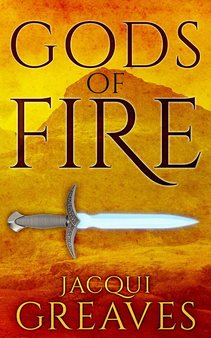
​I can now report that pushing the ‘Publish’ button is both a terrifying and exhilarating experience for a first-time indie writer. It's an action I delayed through fear for such a long time. But now it’s done and I'm wondering why I was so hesitant.
I won't lie and say that Gods of Fire hit the market hot and flew off the e-shelves like a rocket. It didn't. For a solid 48 hours I sat at a single sale. I knew who bought it and I love her for it (and no, it wasn't my Mum). A week later, sales aren't meteoric, but a steady trickle of people have paid over their money and purchased my book.
MY BOOK.
​I still love those words. I love being able to tell people how they can buy my book. It's thrilling!
I know I haven't done the launch quite right. I didn't do a proper cover reveal, I didn't set up pre-orders, I didn't send out advance reader copies for reviews on launch, and my marketing plan consists of scribbled notes on a piece of paper that is drifting around my desk somewhere. To make matters more interesting, I launched in a week when my calendar was full of pre-Xmas social events, leaving me little time to write up material for my lovely author friends who'd offered to host me on their blogs.
I've tried not to become a one-dimensional social media publicity machine. Instead, I'm drip feeding my “buy my book" plugs in and around my usual tweets and updates, and advertising on promotional pages and feeds one at a time, rather than flooding them all at once.
I've ordered some postcards with the cover and buy link on one side and the blurb and my bio on the back. I intent to drop them around the cafes, restaurants and shops I frequent. I'm also planning to send press releases to a few of the local newspapers, not sure how successful that'll be, but no harm trying!
I'm not driven by best-seller lists, what I want is to find my readership and achieve steady sales to people who will come back for more.
I'm sure I've made some standard rookie mistakes, but I've published my book and am building my confidence and gaining experience, so I do it better for the next one. This is my marathon, not my sprint.
But...if like 1000 of you decide to buy Gods of Fire tomorrow, read it and leave a review, then I'll be delirious with joy!


0 Comments

The Trickster

11/12/2018

0 Comments

 
Picture
I’ve been thinking about the role of the antagonist in stories. A super quick search of the interwebs revealed four main types of antagonist: Evil, Opposing, Superior and Internal (honestly, I’m sure there are other classifications, but this serves my need for now). They’re all interesting and worthy of deeper consideration, but it’s the evil antagonist who is most relevant to where my musings have been taking me.
The evil antagonist is the one who is evil for the sake of being evil. This character may have a back-story that gives them some excuse, but generally it’s not critical to understand their why. All that matters is how they satisfy their greed, hunger for power and uncompromising drive to achieve their nefarious goal at any cost, and how they torment the hero of the story along the way.
Often, we feel nothing but hatred for this character, they represent the worst traits of humanity distilled and concentrated for effect. No-one feels empathy with the likes of Lord Voldemort from Harry Potter, Sauron in Lord of the Rings, Darth Sidious in Star Wars, or Doctor Smith in the revamped Lost in Space. They have no redeeming features.
But there is another kind of evil antagonist—the trickster. They’re usually a secondary antagonist to some greater evil, either facilitating the main antagonist, or confounding the hero for their own means. Yes, they’re evil, but they have moments of vulnerability that fool not only the hero, but us as well, into empathy. We can almost see ourselves in their place, even if just for a moment.
My favourite examples of the trickster are The Master/Missy from Doctor Who, Loki in all his incarnations, Moriarty from Sherlock Holmes and, most recently, Ms Wardwell (otherwise known as Lilith or Madam Satan) who was the sole reason I watched the entire first season of the Chilling Adventures of Sabrina in one sitting!
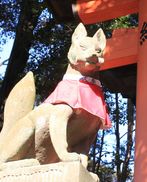
Of all the antagonists I adore tricksters above all others! What I love most about these characters is their intelligence and wit. So, it’s really no surprise that I’m incorporating one into my current work in progress (known for now as ‘The Japanese Story’). My trickster is a white fox who acts as a messenger between humans and Gods. He’s a fun character to write and I hope I do him justice as his role develops.
 

0 Comments

Voyage of Self-Publication

10/8/2018

0 Comments

 
Picture
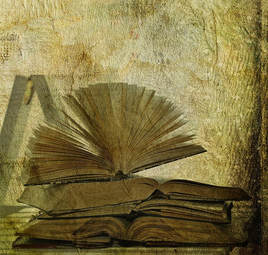
For over a year I’ve been sending the manuscript of my first complete novel, “Gods of Fire”, out to agents seeking representation. To say that it has not been a success is a wild understatement. Yet, I remain convinced I’ve written a good story that will appeal to readers who love both fantasy and erotica.

So, I’ve launched myself into the unknown, but thankfully well-charted, waters of the self-publication process.

A complete novice, my first step was to send out a call to my writerly colleagues on Facebook and Twitter. This resulted in a mixed bag of responses, most of them encouraging and many with some great advice on how to get started. I also spent at least a day poking around the internet, looking for resources and recommendations for success.

The two main pieces of advice that have popped up over and over again are:
  1. Get a professional editor to work on your manuscript;
  2. Your cover is critical, and again professional help is highly recommended.
I patted myself on the back for already having ticked off number one, and I’m chasing up a cover artist to help me with number two.

My next challenge was to convert my Word document into the right format for a book. Again, two main recommendations emerged, Vellum and Draft2Digital. Vellum is for Mac users, which I am not, so the decision was easy. It took me a day of trial and error, formatting my manuscript and testing the different options in Draft2Digital to get a look I’m happy with.

Within the space of just a couple of days, I’d gone from terrified and completely ignorant, to sufficiently confident in my ability to create a product and get it into the market. But of course, that’s just the beginning of the process.

So watch this space!


0 Comments

Witch on her bat

7/20/2017

2 Comments

 
Picture
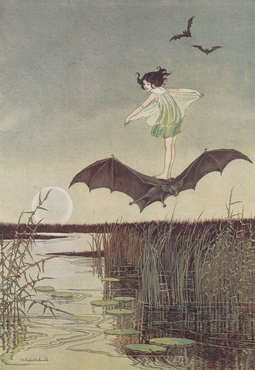
​The first book I ever bought by myself was The Enchanted Forest, a story of fairies, elves, goblins and witches, written by Ida Rentoul Outhwaite and her husband Grenbry Outhwaite. I bought it at a jumble sale and it was already old. The pages fragile and the cover barely attached. Even at that age I recognised it as something very precious. It still resides on my bookshelf, and despite many readings remains in much the same state as when I first picked it up.
Not only was the story appealing to a young girl, but it was filled with the most beautiful pictures, one of which caught my imagination and held it for many years.
It was a coloured plate entitled ‘The Witch’s Sister on her Black Bat’.
When I began to write the novella Rose Moon, this was the image that set the opening scene. This was the witch who I imagined as my Midnight.
                                ***
Bakke carried his mistress through the summer night’s sky with fluid ease. Midnight threw back her head and laughed, face luminous with the pure joy of anticipation. They had waited so very long for this time to arrive and had just one more day to mark.
Her nipples puckered at the mere thought of it. She allowed her fingers to graze against them through the sheerest layer of white chiffon. It would be so easy to slide her fingers between her thighs and stroke herself into delight, but an orgasm now would weaken her magic, and her sisters would be furious with her.
With a soft sigh of frustration, she flung her arms wide and allowed the movement of the warm air to caress her form. The silver-shot fabric of her diaphanous slip fluttered across her body, dipping and swirling with the slow even beat of the bat’s wings. Raven curls tumbled in a flurry around her pale face.
Half a dozen smaller bats flitted overhead, accompanying their witch on her quest.
“Look, my darlings. See how my moon casts its silver trail on the water below us to guide our way? It won’t be long now, we’re almost there.”
Bakke swooped low over the clumps of bulrushes bordering the edge of the waterway and headed into the depths of the forest. His sinuous flight path through the maze of broad tree trunks tilted upwards to match the rise of the ground beneath them. They flew in darkness until the trees thinned to allow a glimmer of silvery moonlight, then they burst once more into open space. Midnight, Bakke and the bat familiars circled higher until they hovered above the tor that protruded with phallic insolence from the clearing in the surrounding forest.
                                                       ***
A sweet and gentle start, but trust me…the tale gets much darker and mayhem, death and destruction soon follow!
Once again, I’ve teamed up with three other authors, under the expert guidance of Devi Ansevi, to put together a steaming hot addition to the PNRLust Anthologies.
Lust in Summer: Paranormal Erotic Anthology Vol. 7 is available on Amazon for your reading pleasure. Please indulge!

2 Comments
<<Previous
    Find me in other places...
    Amazon
    Goodreads
    ​
    Facebook

    Mastodon
    Email

    Archives

    November 2025
    September 2025
    August 2025
    June 2025
    April 2025
    March 2025
    February 2025
    December 2024
    October 2024
    August 2024
    July 2024
    June 2024
    April 2024
    March 2024
    January 2024
    December 2023
    November 2023
    October 2023
    September 2023
    June 2023
    December 2018
    November 2018
    October 2018
    July 2017
    March 2017
    January 2017
    November 2016
    October 2016
    September 2016

    Categories

    All
    AI
    AI Apps
    AI Bots
    AI Generated
    Angela Yuriko Smith
    Antagonist
    Antarctica
    Aotearoa
    Art
    Artificial Intelligence
    Authors
    Bad Sex
    Bad Sex Awards
    Banned Words
    BDSM
    Becky Chambers
    Beowulf
    Book
    Book Covers
    Book Publishing
    Book Review
    Books
    Book Sales
    Brand
    British Fantasy Awards
    British Fantasy Society
    Censorship
    Change
    Character
    Character Arc
    Character Development
    Characters
    Character Voice
    Chatbots
    ChatGPT
    Chinese Diaspora
    Chinese Mythology
    Chinese Women
    Clan Destine Press
    Coffee
    Colonialism
    Conferences
    Conventions
    Copyright
    Cover
    Craft
    Craft Of Writing
    Creating Monsters
    Creatives
    Creatures From The Deep
    Critique
    Critique Group
    Crone
    Cuba Press
    Darkness
    Death
    Deep Sea
    Demons
    Dialogue
    Discovery Writer
    Dystopian
    Economics
    Editing
    Edwidge Danticat
    Elves
    Emmanuelle De Maupassant
    Environments
    Erotic
    Erotica
    Evil
    Extremism
    Fantasy
    Fantasy Writing
    Fascism
    Feminism
    Feminist
    Feminist Writing
    Fiction
    Fox Spirit On A Distant Cloud
    Free Speech
    Fundamentalism
    Fury
    Game Of Thrones
    Genre
    Genre Blending
    Genre-blending
    Ghost Assassins Of Bijou
    Gods
    Gods Of Fire
    Good Sex
    Grammar
    Grief
    Halloween
    Harry Potter
    Hate Speech
    Highland Pursuits
    Historical
    Homophobia
    Hope
    Horror
    Horror Writing
    How To Write
    How To Write Sex
    Humour
    Indie
    Inspiration
    Jacqui Greaves
    Japanese
    J.K. Rowling
    Juliette Banks
    Kurangaituku
    Language
    Lee Murray
    Legacy
    Lesbian
    Lessons In Writing
    Letters From Elsewhere
    Literary
    Literary Agent
    Literary Awards
    Literary Festivals
    Lovecraft
    Lust
    Margaret Atwood
    Marion Zimmer Bradley
    Marketing
    Mark My Words
    Martha Wells
    Measuring Success
    Medusa
    Memories
    Memory
    Mentoring
    Midsummer
    Misogyny
    Mists Of Avalon
    Money
    Monsters
    Monstress
    Neil Gaiman
    Newsletters
    New Writers
    New Zealand
    Nikky Lee
    Nnedi Orokafor
    Novel
    Novella
    Novellas
    Ocean
    Older Characters
    Old Women
    Paranormal
    Patriarchy
    Plot
    Plotting
    Poetry
    Pornography
    Prejudice
    Promotion
    Prose
    Pseudonym
    Publication
    Publish
    Published
    Publishing
    Publishing Industry
    Punk
    Queer
    QueerFiction
    Rachel De Vine
    Racism
    Rage
    Readers
    Reading
    Realms
    Rebellion
    Reclaiming The Crone
    Relationships
    Remains To Be Told
    Research
    Resistance
    ReWriting
    Romance
    Rose Moon
    Russian Bride
    Saga
    Sales
    Sandman
    Science
    Science Fantasy
    Science Fiction
    SciFi
    Scotland
    Scraping
    Self
    Self-determination
    Self Editing
    Self Publishing
    Self-publishing
    Setting
    Sex
    Sexism
    Sex Scenes
    Sexuality
    Shape-shifter
    ShortStory
    Short Story Collection
    Sidhe
    Space Opera
    Specfic
    Speculative
    Speculative Fiction
    SpeculativeFiction
    Story Arc
    Submission
    Subversive
    Subversive Writing
    Success
    Superhero
    Supernatural
    Sylvia Spruck Wrigley
    Tea
    Terry Pratchett
    Toni Morrison
    Travel
    Trickster
    Truth
    Unreliable Narrator
    Utopian
    Vampire
    Veracity
    Verisimilitude
    Verity
    Villainous Writers
    Villains
    Voice
    Werewolf
    What If
    Who Am I
    Witches
    Woke
    Women
    Words Matter
    World
    World Building
    World Fantasy Awards
    World Fantasy Convention
    Worlds
    Writers
    Writing
    Writing Advice
    Writing As Rebellion
    Writing Awards
    Writing Craft
    Writing Dialogue
    Writing Erotica
    Writing Organisations
    Writing Pornography
    Writing Research
    Writing Sex
    Yamaubu

    RSS Feed

© COPYRIGHT 2025. ALL RIGHTS RESERVED.
  • Home
  • About
  • Stories
    • Flashes and Snippets >
      • Madame Baderschmitt’s Sweet Emporium
      • Touch
      • Familiar
      • Three Wishes
      • Resurrection
      • The Key
      • A Night Before Xmas
    • Published Stories and Poems
    • Byline
  • Blog
  • Contact